
Wood vs. Vinyl Fencing in Colorado Springs: The Honest Trade-Off
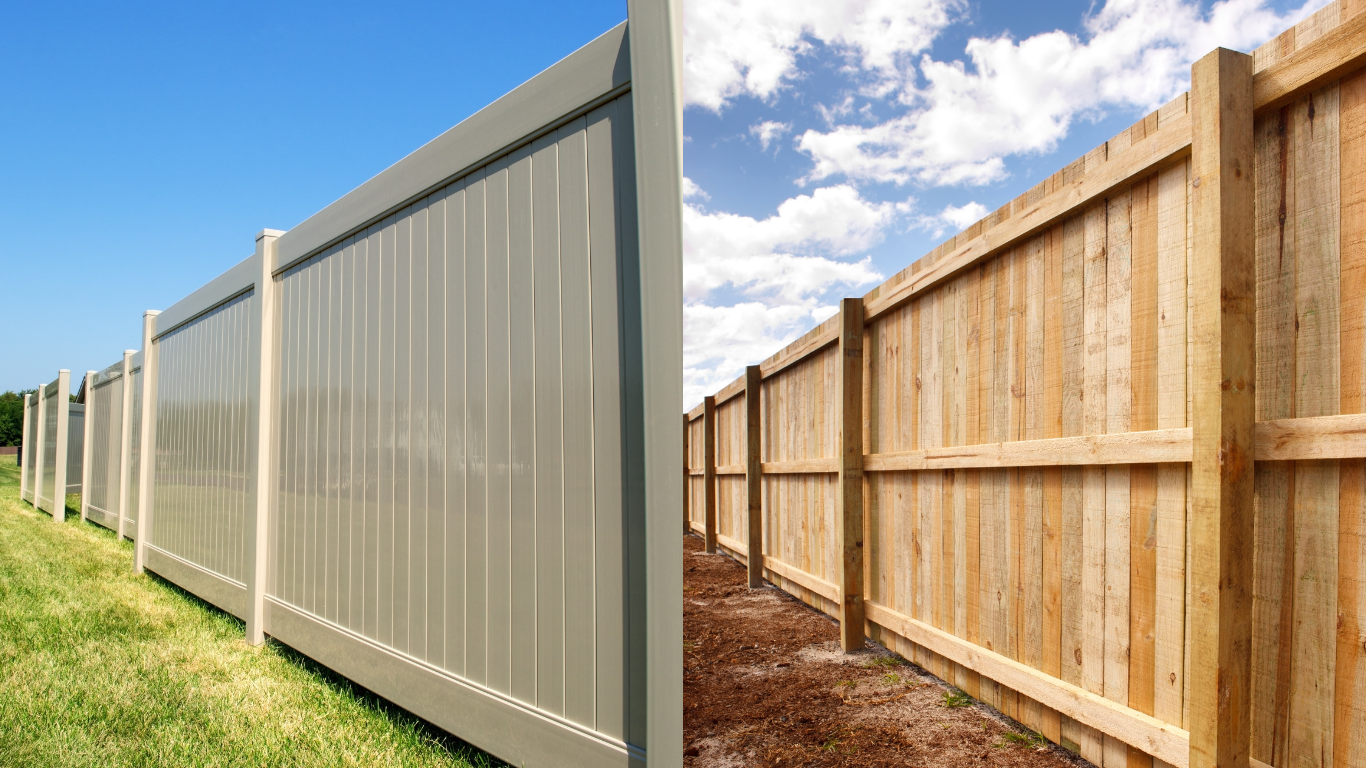
Most articles about wood versus vinyl fencing will tell you both are great options, list out a pros and cons table, and leave you no closer to an answer than when you started. This isn't that article.
We've built and repaired fences across Colorado Springs and the Front Range for years, and we have real opinions about how these two materials perform in our specific climate. The elevation, the UV exposure, the freeze-thaw cycles, the wind — Colorado puts fences through conditions that most national comparisons don't account for. What works fine in the Southeast or the Pacific Northwest plays out differently here.
In Colorado Springs, wood can absolutely be the right call. So can vinyl. The answer depends on your yard, your budget, your maintenance tolerance, and what you're actually asking the fence to do.
Why the Colorado Climate Changes the Wood vs. Vinyl Decision
Most wood-versus-vinyl comparisons are written for the national average, which means they're written for a climate with moderate UV, moderate wind, and consistent humidity. Colorado Springs is none of those things.
At around 6,035 feet, UV radiation here is significantly more intense than at sea level. The sun bleaches and dries wood faster, degrades stain and sealant faster, and puts vinyl through thermal cycling that more temperate climates simply don't produce. Colorado Springs also averages around 150 frost days per year, which means posts and panels go through repeated freeze-thaw movement that lower-elevation climates don't impose.
Then there's the wind. Front Range gusts regularly hit 40 to 50 mph, and privacy fence panels act like sails. Both wood and vinyl take a beating in sustained wind events, but they fail differently — wood panels can crack or split, while vinyl panels can pop out of their frame channels or crack at stress points in cold weather.
Neither material is inherently bad for Colorado Springs. But both require you to plan around the climate rather than assume you can install and ignore.
What Wood Fencing Actually Looks Like After 5, 10, and 15 Years on the Front Range
A wood fence installed correctly and maintained consistently can last 20 years or more in Colorado Springs. A wood fence installed correctly and never maintained will show significant wear within five to seven years. That gap is wider here than in most of the country because of the UV and freeze-thaw exposure.
At the five-year mark on a maintained fence, you're typically looking at a fence that still looks solid, may need a fresh coat of stain or sealant depending on the product used, and might have a post or two that have started to show minor movement from ground cycling. Nothing major, nothing unexpected.
At ten years, a well-sealed cedar fence is usually still in good shape. The posts are where problems typically start showing — particularly if they weren't set deep enough or weren't properly concreted. Front Range soil movement is relentless, and posts that aren't anchored right don't make it a full decade without issues.
At fifteen years, even a maintained wood fence is going to need some work. Post replacements, panel refreshes, gate hardware replacements — these are expected costs, not failures. Cedar holds up better than pressure-treated pine at this stage because of its natural resistance to rot and insects. If you started with pressure-treated pine and skipped maintenance cycles, fifteen years is often where the math starts to favor replacement over repair.
The wood fences we see fail early almost always share one of two problems: posts that were set without adequate depth and concrete, or panels that were never sealed after installation. Both are avoidable.
The Real Maintenance Math on a Wood Fence in Colorado Springs
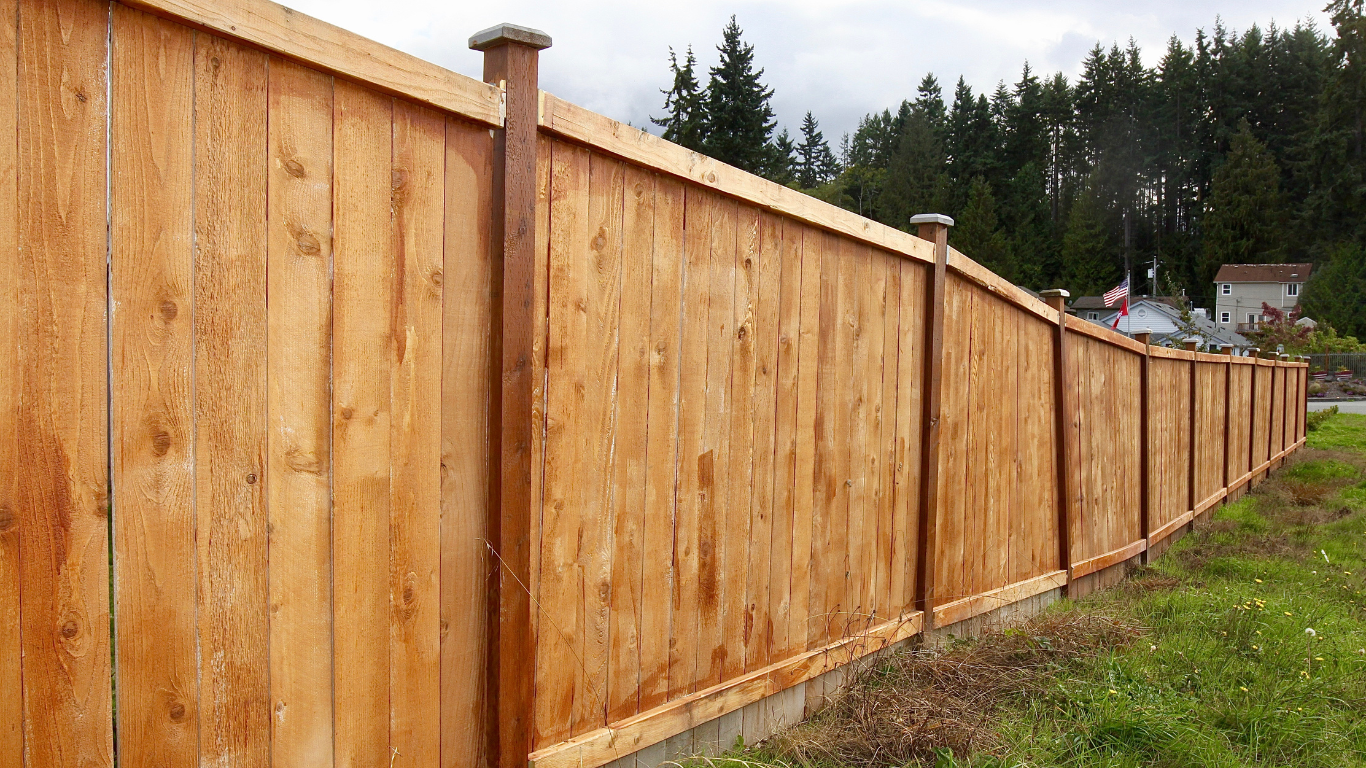
A wood fence in Colorado Springs needs to be sealed or stained every two to three years. At elevation, UV exposure accelerates the breakdown of surface coatings faster than the product manufacturers typically account for — most sealant manufacturers write their maintenance intervals for lower-elevation applications.
If you hire it out, a professional stain and seal job on a standard residential fence typically runs $600 to $1,200 depending on fence size and condition. If you do it yourself, you're looking at the cost of product and a day of prep and application time.
Over a fifteen-year fence lifespan, that's five or six maintenance cycles, which adds real money to the total cost of ownership. Add in likely post replacements at the ten-year mark and you're looking at a total cost that's meaningfully higher than the installation price.
This doesn't make wood the wrong choice. It makes it an honest choice — one where you go in knowing what the fence is going to ask of you over time. For homeowners who want the look of natural wood and don't mind the upkeep, wood is a perfectly sound investment in Colorado Springs. For homeowners who want to install a fence and not think about it again for twenty years, the math points toward vinyl.
Where Vinyl Performs Better in Colorado Springs — and Where It Doesn't
Vinyl is genuinely low-maintenance. There's no sealing, no staining, no painting — an occasional rinse with a garden hose is about all it needs. A quality vinyl fence installed correctly in Colorado Springs can last 25 to 30 years with no meaningful upkeep, which is why it's become the most popular residential fencing material in newer developments across the Front Range.
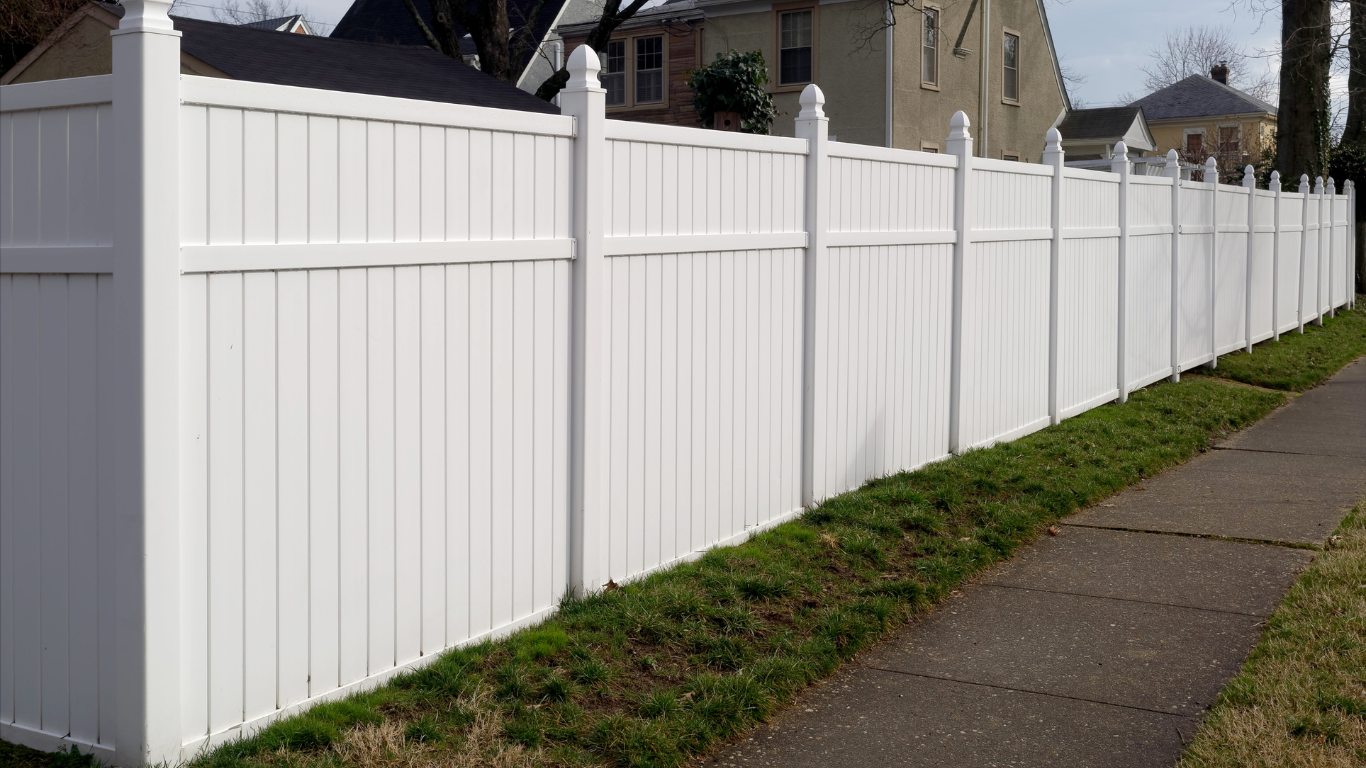
The performance trade-off that matters in Colorado specifically is cold-weather brittleness. Vinyl becomes less flexible as temperatures drop, and hard impacts in cold conditions — a branch in a windstorm, a lawnmower getting too close — can crack a vinyl panel in a way that wood would just dent or splinter. Cracked vinyl panels typically need to be replaced entirely rather than repaired, and sourcing a matching panel from the original manufacturer can take time.
The other consideration is the look. Vinyl comes in fewer profiles and colors than wood, and while the quality of vinyl fencing has improved considerably, it has a different visual character than real wood — cleaner and more uniform, which some homeowners prefer and others don't. HOAs in neighborhoods like Wolf Ranch, Banning Lewis Ranch, and Cordera often specify vinyl for that consistency, which makes the decision straightforward for those properties.
Vinyl also doesn't take custom work as naturally as wood. If you want a unique height, a non-standard profile, or a fence that transitions across a significant grade change, wood gives a contractor more flexibility to build exactly what the yard requires.
How to Decide Which Material Is Right for Your Yard
The honest framework comes down to three questions.
How much maintenance are you willing to commit to? If the answer is none, vinyl is the better fit. If you're comfortable with a staining project every two to three years and you want the warmth and character of natural wood, wood is a sound choice in Colorado Springs as long as it's installed right.
What's your timeline? If you're planning to sell within five to seven years, wood gives you a lower upfront cost and will still look great at that point if it was installed and maintained properly. If you're in the house for the long haul, vinyl's lower lifetime cost and minimal upkeep become more compelling.
What does your HOA allow or require? A significant number of Colorado Springs neighborhoods have specific fencing requirements — material type, color, height, and profile. Check those before you commit to either material, because the decision may already be made for you.
If you're weighing the two and want a professional opinion on what makes sense for your specific property, New View Fence Co. is happy to take a look and give you a straight answer. We build both, and we'll tell you which one fits your situation better rather than just selling you what's easier to install.
For more detail on either material, our wood fencing and vinyl fencing pages walk through the options we install across Colorado Springs and the Front Range.
Frequently Asked Questions
Q: Does wood or vinyl fence last longer in Colorado?
With proper maintenance, vinyl typically lasts longer — 25 to 30 years compared to 15 to 20 years for wood in Colorado's climate. Wood can reach 20-plus years if it's built with quality materials, set with properly concreted posts, and sealed every two to three years. Skipping maintenance cycles in Colorado's UV-heavy climate shortens that lifespan considerably.
Q: Does vinyl fence crack or warp in Colorado winters?
Vinyl doesn't warp, but it does become more brittle in cold temperatures. Hard impacts during winter months — falling branches, debris in high-wind events — can crack vinyl panels in a way that warmer-weather impacts wouldn't. A quality vinyl fence installed with proper expansion allowances in the frame channels handles Colorado winters well under normal conditions. Warping is not typically a problem with vinyl; cracking under impact in cold weather is the more relevant concern.
Q: How often does a wood fence need to be stained or sealed in Colorado Springs?
Every two to three years is the right interval for Colorado Springs. At 6,000 feet, UV exposure breaks down surface coatings faster than it does at lower elevations, so the standard manufacturer recommendations — which are often written for sea-level climates — tend to be conservative for Front Range conditions. Using a high-quality exterior stain and starting the first application within the first year of installation gives the fence the best foundation.
Q: Which fence material holds up better against Front Range wind?
Both materials can handle Front Range wind when the fence is built correctly. The critical factor is post installation depth and concrete fill, not the panel material. A wood or vinyl privacy fence with properly set posts in Colorado's soil conditions will handle sustained wind events reliably. Where vinyl sometimes has an edge is that panels can flex slightly in the frame rather than splitting — but that same flexibility can cause panels to pop out of channels in extreme gusts if the frame wasn't installed with adequate tension.
Q: What's the price difference between wood and vinyl fencing in Colorado Springs?
Wood fencing in Colorado Springs typically runs $20 to $35 per linear foot installed for pressure-treated pine and $30 to $45 per linear foot for cedar. Vinyl falls in the $25 to $40 per linear foot range depending on profile and height. The upfront difference is smaller than most homeowners expect, and over a 15-year period, the maintenance costs on wood close the gap considerably. For a standard 150-linear-foot residential fence, wood installation runs roughly $3,500 to $6,500 and vinyl runs $4,000 to $7,000 — but add five to six maintenance cycles to the wood cost and the lifetime numbers shift.
Q: Which fence material is better for HOA-required fencing in Colorado Springs?
Vinyl is specified far more often by HOAs in Colorado Springs, particularly in newer developments along the Front Range. Neighborhoods like Wolf Ranch, Banning Lewis Ranch, and Cordera typically require specific vinyl profiles, colors, and heights. If you're in an HOA, check the requirements before assuming you have a choice — the decision is often already made. If you're outside an HOA or your HOA allows either material, the choice comes down to the factors above.
New View Fence Co. installs and repairs wood, vinyl, and a full range of fencing materials across Colorado Springs, Monument, Fountain, Black Forest, Peyton, Castle Rock, and the Front Range. Get a free quote today.
