
Farm and Agricultural Fencing in Colorado: What Property Owners in the Colorado Springs Area Need to Know
Fencing a backyard is a straightforward project. Fencing a horse pasture, a cattle operation, or a five-acre rural property in El Paso County is a different conversation entirely. The materials are different, the post requirements are different, the wildlife pressure is different, and the decisions you make at installation have consequences that play out over decades.
The Colorado Springs area stretches well into genuine agricultural territory — Black Forest, Peyton, Fountain, Calhan, and the unincorporated reaches of El Paso County are home to thousands of horse properties, hobby farms, and working livestock operations. If you're fencing one of these properties, this guide covers what you actually need to know before you start.
What Agricultural Fencing in Colorado Actually Has to Handle
Residential fencing in Colorado Springs is designed to keep people in or out and provide privacy. Agricultural fencing has to do something harder — reliably contain animals that weigh anywhere from 100 to 1,500 pounds, on terrain that isn't always flat, in conditions that include sustained wind, hard freezes, rocky soil, and consistent wildlife pressure.
On the Front Range specifically, elk are the factor that surprises most first-time rural property owners. El Paso County sits within active elk migration corridors, and elk don't treat fencing the way smaller deer do. A standard residential fence won't stop an elk — they'll push through it, jump it, or walk it down. Property owners in Black Forest and Peyton who aren't fencing specifically for wildlife containment or exclusion frequently find out the hard way that their fence was never built to handle that pressure.
The other Front Range factor is soil. Caliche — the calcium carbonate hardpan common in El Paso County soils — creates real challenges for post installation. It's dense enough to resist digging, doesn't drain well, and can cause posts to heave when moisture gets trapped against the footing through a freeze-thaw cycle. Agricultural fencing posts need to be set deeper than residential posts to account for this, and the method used to set them matters.
Fencing Options for Horses, Cattle, Goats, and Mixed Livestock on the Front Range
There's no single right answer for agricultural fencing because the right answer depends on what you're containing. Different animals create different pressure on a fence, and the fencing that's appropriate for cattle is often wrong for horses, and vice versa.
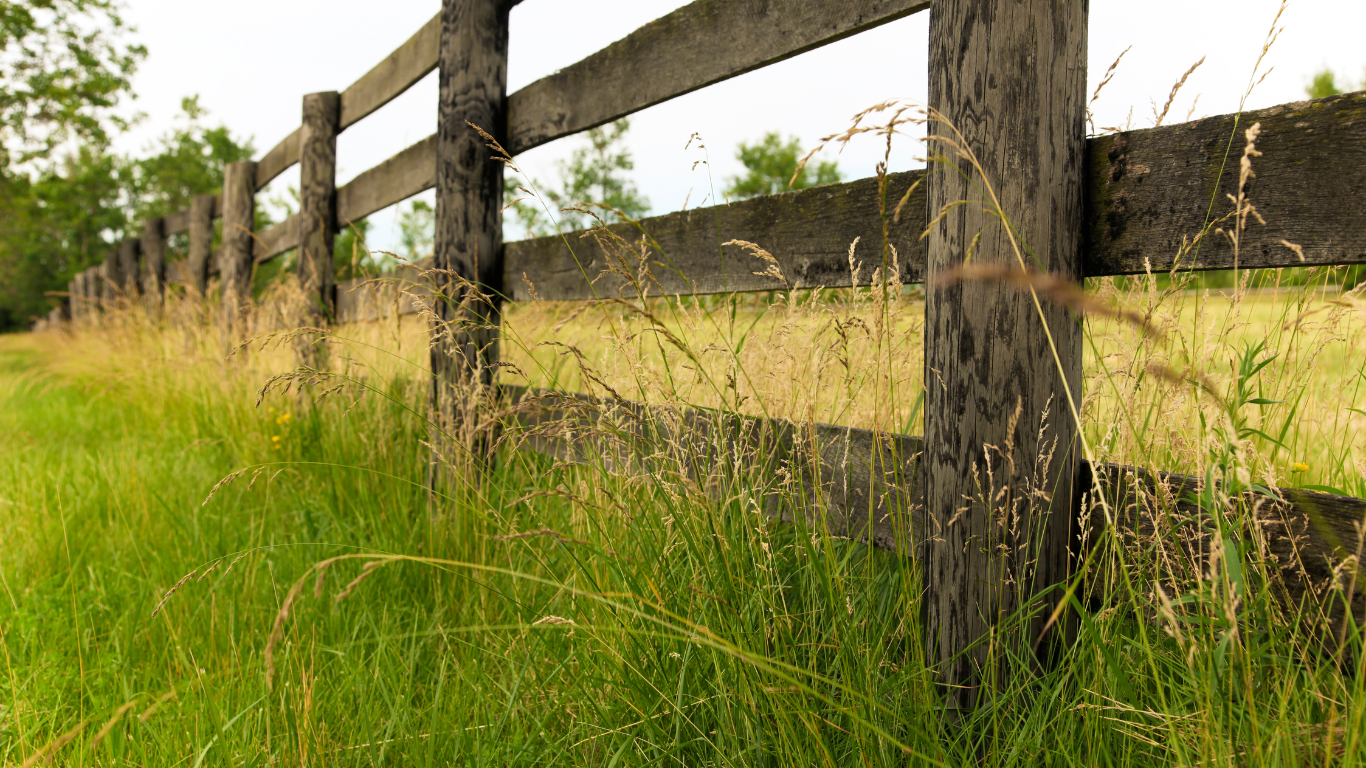
Horse fencing is where the most care is required. Horses are large, fast, and can seriously injure themselves on the wrong fence material. Barbed wire is not appropriate for horses — a horse that gets tangled in or runs through barbed wire faces significant injury risk. The most common horse-safe options in Colorado are four-board wood rail fence, no-climb woven wire (also called field fence or horse fence), and high-tensile smooth wire with electric. Each has trade-offs in cost, visibility to the horse, and maintenance requirements. Board rail fencing is the most visible and the most traditional, but it requires the most upkeep. Woven wire is durable and effective but needs to be installed with enough tension to stay upright and horse-safe over time. Electric adds an additional deterrent that works well for horses that respect it.
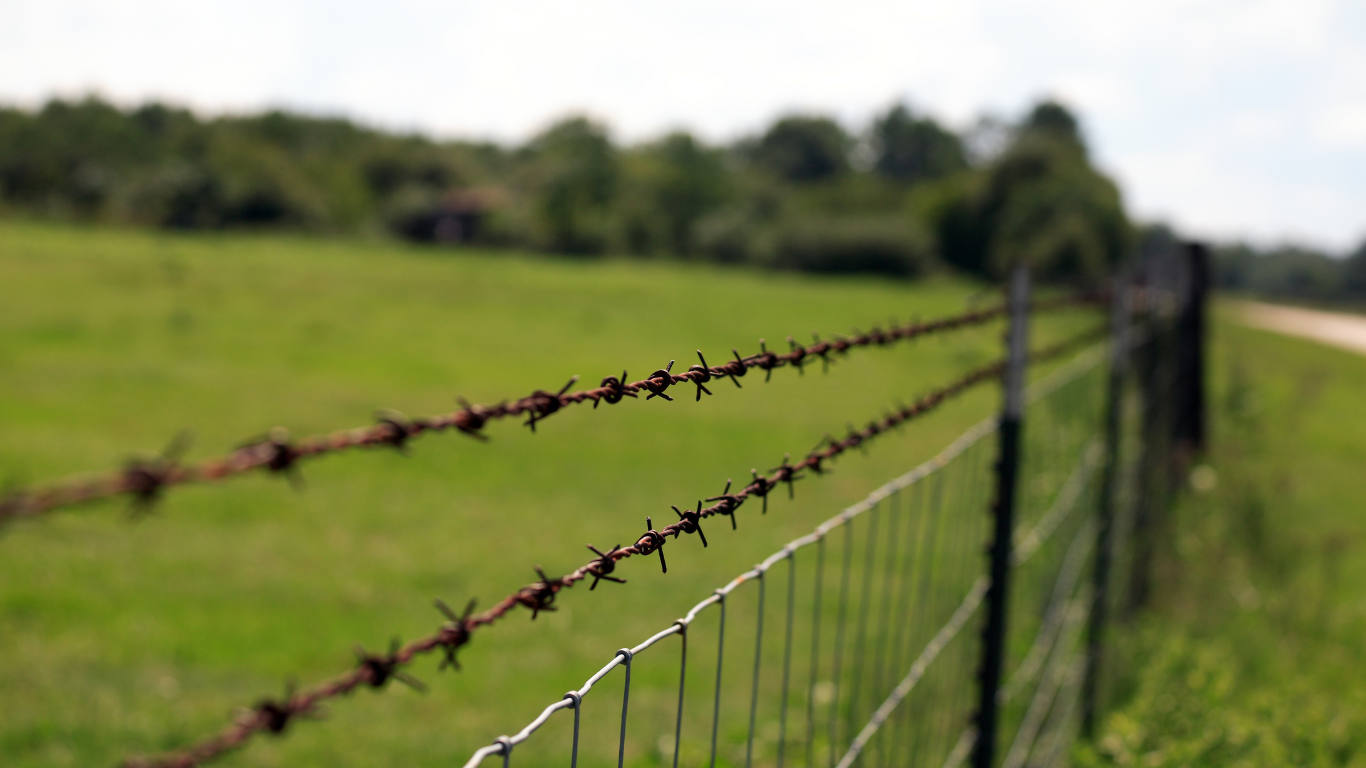
Cattle fencing is more forgiving in terms of material options. Three- to five-strand barbed wire is the most common cattle fence on the Front Range, and it's cost-effective over large acreages. Cattle panels — welded wire panels typically four feet high — are a strong option for smaller paddocks or areas where you need to move animals frequently. The critical factors for cattle are post strength and wire tension. A fence that cattle can push through once will get pushed through again.
Goats and small livestock are widely considered the hardest animals to fence reliably. Goats are escape artists — they test fence lines constantly, will push through gaps that seem too small, and can climb in ways that other livestock won't attempt. The standard recommendation for goats is no-climb woven wire with the bottom buried or secured close to the ground, combined with an electric offset wire to discourage fence pressure from the inside. A fence that works for cattle will not necessarily work for goats.
Mixed livestock situations — a horse property that also has a few cattle, or a hobby farm with multiple species — require thinking through each animal's fence requirements and finding a design that satisfies all of them. This is worth discussing in detail before installation, because building it right the first time is significantly less expensive than retrofitting later.
How Much Does Agricultural Fencing Cost in Colorado Springs and the Surrounding Area
Agricultural fencing costs scale with acreage, material, terrain, and post requirements. The numbers below reflect Front Range conditions, including the soil and terrain factors specific to El Paso County.
Barbed wire (three- to five-strand) runs approximately $3 to $8 per linear foot installed for standard terrain. It's the most economical option per foot for large-acreage perimeter fencing where horses are not involved.
Woven wire / field fence (no-climb horse fence) runs $8 to $14 per linear foot installed depending on fence height and post spacing. This is the most common choice for horse properties on the Front Range.
Board rail fencing (three- to four-board wood) runs $20 to $35 per linear foot installed, making it the most expensive option per foot but also the most aesthetically traditional and visible to horses.
High-tensile wire with electric runs $4 to $10 per linear foot installed for the basic installation, with energizer equipment costs on top. It's cost-effective for large perimeter runs and works well as a backup deterrent on any fence type.
Post costs on agricultural fencing are heavily influenced by soil conditions. Caliche or rocky terrain adds time and equipment cost to post installation. Properties in parts of El Paso County where rock is close to the surface sometimes require mechanical rock drilling for post holes, which affects overall project pricing.
For a realistic planning benchmark: fencing a five-acre square property (approximately 1,870 linear feet of perimeter) with woven wire horse fence runs roughly $15,000 to $26,000 installed on standard terrain. Barbed wire on the same perimeter runs $6,000 to $15,000. Those ranges widen significantly on rough terrain or in areas requiring substantial post depth or rock work.
Post Depth, Wire Gauge, and What Colorado's Soil Conditions Actually Require
The two factors that determine whether an agricultural fence holds up over time in El Paso County are post depth and wire tension. Both are more demanding here than in lower-elevation, more consistent soil climates.
Post depth for agricultural fencing in Colorado should be a minimum of one-third of the total post length in the ground — for a six-foot post, that's two feet. On properties with known caliche or freeze-thaw soil movement, going deeper is worth the extra effort. According to Colorado State University Extension, posts in high-moisture or freeze-thaw conditions should be set with concrete or compacted gravel fill to prevent heaving over time.
Wire gauge matters because agricultural fencing in Colorado takes pressure from both animals and weather. Heavier gauge wire — 12.5 gauge for high-tensile applications — holds tension better through Colorado's temperature swings than lighter gauge alternatives. For woven wire horse fence, look for a minimum 12.5 gauge top and bottom wire with 14 gauge fill wires.
Corner and brace posts are the most important structural elements in any agricultural fence run. A weak corner post is where agricultural fences fail — the tension of the entire run pulls against it, and if it's not properly braced and set, it starts to lean and the whole fence loses tension. This is worth spending more on at installation.
Elk, Deer, and Predator Pressure — How Rural El Paso County Property Owners Think About Fencing
Elk exclusion fencing is a separate category from livestock containment fencing, and it's a growing conversation for property owners in Black Forest and the rural areas north and east of Colorado Springs where elk populations are active.
A standard four-foot agricultural fence won't stop elk. Elk exclusion typically requires a minimum of seven to eight feet of fence height using high-tensile smooth wire or woven wire, and even then, elk are capable of clearing it when motivated. Colorado Parks and Wildlife has published guidance on elk-resistant fencing for property owners dealing with crop or garden damage, which is worth reviewing for anyone whose property sits in an active corridor.
For predator pressure — coyotes are the primary concern for small livestock owners in El Paso County — the most effective fencing combines a woven wire field fence with a buried or ground-secured bottom edge and an electric offset wire close to the ground on the outside of the fence. Coyotes dig, so a fence that doesn't address the bottom edge leaves a persistent vulnerability.
New View Fence Co. installs agricultural and farm fencing throughout Colorado Springs, Black Forest, Peyton, Fountain, Calhan, and the surrounding El Paso County area. If you're planning a livestock fencing project and want to talk through the right material and design for your property, contact us for a free quote.
Frequently Asked Questions
Q: What's the best fence for horses in Colorado Springs?
No-climb woven wire field fence — sometimes called horse fence — is the most common and practical choice for horse properties on the Front Range. It's safe for horses, durable in Colorado's climate, and cost-effective compared to board rail fencing over large acreages. Four-board wood rail fencing is the premium traditional option and the most visible to horses. Barbed wire is not appropriate for horses. For properties with electric fence experience, high-tensile smooth wire with a good energizer works well as a primary or supplemental fence. The right answer depends on acreage, terrain, and how many horses and at what density.
Q: How deep do fence posts need to go in Colorado's soil?
A minimum of one-third of the post length should be underground — two feet for a six-foot post, two and a half feet for a seven-foot post. On properties with caliche, clay, or high freeze-thaw soil movement (common throughout El Paso County), going deeper is worth the added effort. Corner and brace posts should be set even deeper and properly braced, since they bear the tension load of the entire fence run.
Q: Do I need a permit for agricultural fencing in Colorado Springs?
Agricultural fencing on unincorporated El Paso County land typically does not require a building permit for standard livestock fencing. However, if your property is within Colorado Springs city limits, or if the fence involves significant structures or specific zoning overlays, permit requirements may apply. Pikes Peak Regional Building Department is the right contact for confirmation. If your property falls under a homeowners association, check those requirements separately — some rural HOAs in El Paso County have their own fencing standards.
Q: What fence material holds up best against elk and deer pressure on the Front Range?
For elk exclusion, height is the primary factor — standard agricultural fencing at four feet won't stop elk. Elk-resistant fencing typically requires seven to eight feet of high-tensile smooth wire or woven wire. For deer, a well-tensioned five- to six-foot woven wire fence provides reasonable deterrence on most properties, though motivated deer will clear lower fences. Colorado Parks and Wildlife offers guidance specific to Colorado's elk and deer populations for property owners dealing with crop or pasture damage.
Q: How much does it cost to fence an acre of land in Colorado?
Fencing one acre of land (approximately 835 linear feet of perimeter for a square acre) in El Paso County runs roughly $2,500 to $12,000 depending on material. Barbed wire is on the lower end; woven wire horse fence runs $7,000 to $12,000 per acre of perimeter; board rail fencing is the highest cost per foot and scales accordingly. Terrain, soil conditions, and gate requirements all affect the total. Five-acre and larger perimeter projects benefit from economies of scale — cost per linear foot typically decreases as the run gets longer.
Q: What's the difference between field fence, cattle panel, and welded wire for livestock?
Field fence (also called woven wire or no-climb fence) is a roll-form product with horizontal and vertical wires woven together — flexible enough to follow terrain, strong enough to contain horses and cattle, and available in heights from 32 to 60 inches. Cattle panels are rigid welded wire panels, typically 16 feet long and 50 inches tall, that are faster to install in small areas and easy to move or reconfigure. They're common for paddocks, pens, and temporary enclosures. Welded wire is a general term that can describe cattle panels or other rigid grid products — the distinction matters when specifying gauge and opening size. For permanent perimeter fencing over large acreage, field fence is more economical and practical. For pens, handling areas, and smaller enclosures, cattle panels are often the better choice.
New View Fence Co. installs agricultural and farm fencing, horse fencing, livestock fencing, and rural property perimeter fencing throughout Colorado Springs, Black Forest, Peyton, Fountain, Calhan, Monument, and the surrounding El Paso County area. Get a free quote today.
