
HOA Fence Rules in Colorado Springs: How to Get Approval Before Spring
If your home is in one of the many Colorado Springs neighborhoods with a homeowners association, a new fence has two sets of rules to clear before the first post goes in. The City of Colorado Springs sets the baseline for height and placement, and your HOA layers its own requirements on top for materials, colors, and style. HOA fencing in Colorado Springs isn't complicated once you know how the pieces fit together, but approval takes time, and it tends to slow down right when everyone wants a new fence in spring. This guide covers what the city requires, what HOAs typically regulate, and how to get your approval in hand over the winter so your project is ready when the weather turns.
Do You Need HOA Approval for a Fence in Colorado Springs?
If you live in an HOA community, you almost always need written approval from your HOA before you build, replace, or change a fence. Most HOA covenants require architectural review for any exterior change that can be seen from the street or a neighbor's yard, and fences are one of the most common items on that list.
City approval and HOA approval are two separate things. The city doesn't check whether your HOA signed off, and your HOA won't accept a fence that meets city code but doesn't match the community guidelines. Most residential fences in Colorado Springs don't need a city permit at all, so the HOA is often the only formal approval you'll need, which also makes it the step people skip most often. Building without it can lead to fines and, in some cases, a requirement to change or remove the fence at your own cost.
Replacing an existing fence usually counts too. Many HOAs require approval even for a like-for-like replacement, especially if the color, height, or style is changing at all.
What the City of Colorado Springs Requires for Fences
The city allows fences almost anywhere on private property without a permit, as long as they meet the standards in the Unified Development Code. According to the City of Colorado Springs, any fence taller than seven feet is treated as an accessory structure and needs a building permit through Pikes Peak Regional Building Department. You'll see six feet listed as the permit trigger on plenty of websites, but the city's own guidance puts it at seven.
The city rules that come up most often on residential projects:
Front yard fences, meaning anything forward of the front of the house, can't be taller than four feet.
Height is measured from the top of the fence, including posts and caps, down to the finished grade. If the ground is higher on one side, the taller measurement counts, and the yard can't be regraded to make a fence comply.
Near driveways, anything taller than three feet has to stay at least five feet back from the edge of the driveway, from the street to ten feet behind the sidewalk, so drivers can see pedestrians and traffic.
Fences also can't block access to gas or electric meters, fire hydrants, or other fire protection equipment, and they aren't allowed in designated preservation areas. If your property is in the Hillside Overlay district or your plans don't fit these standards, the city recommends talking with a city planner first through its Development Review Enterprise at 719-385-5982.
These are rules for properties inside Colorado Springs city limits. If you live in Fountain, Monument, or unincorporated El Paso County, check with that jurisdiction, since the standards can differ.
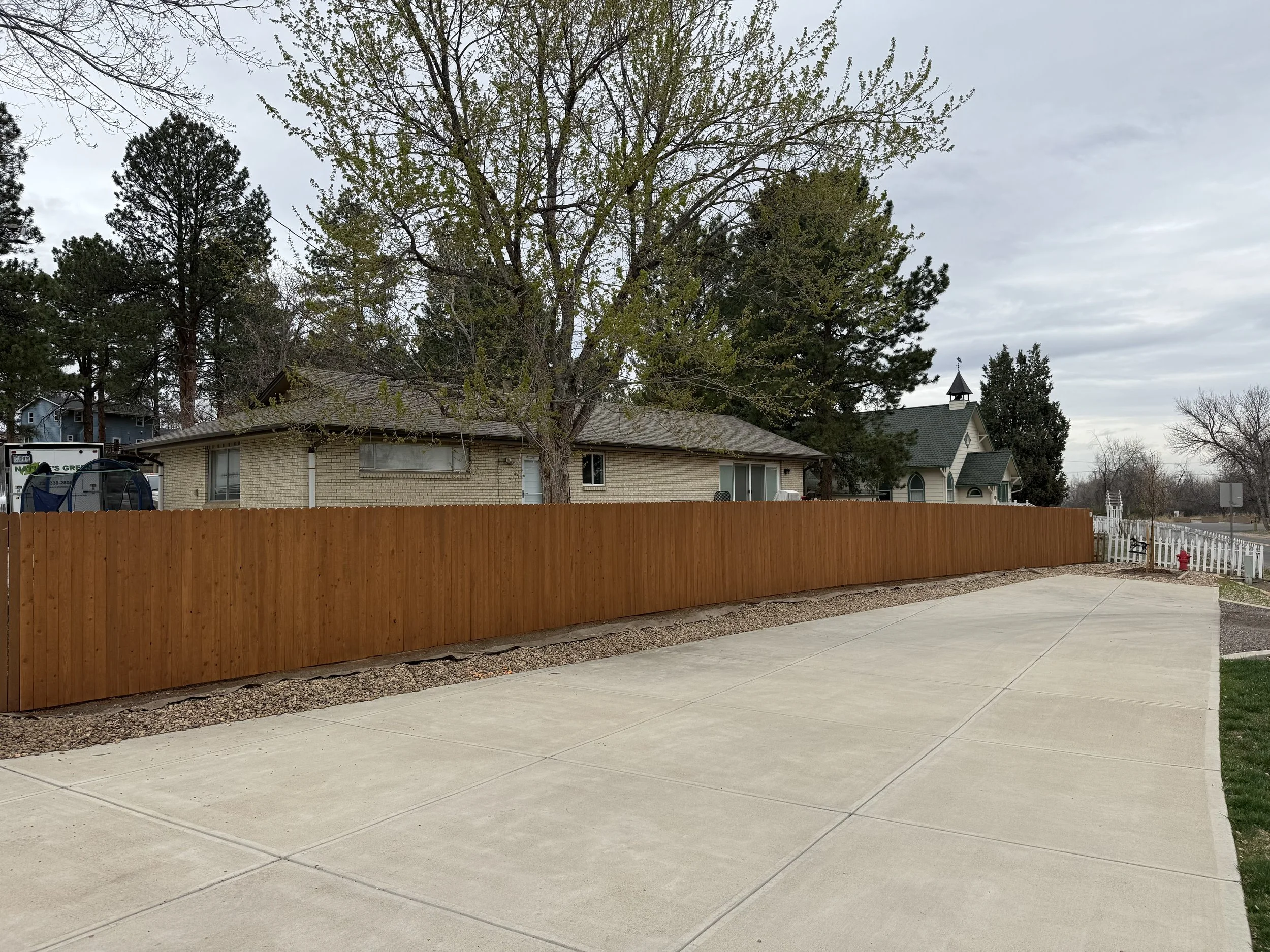
What Colorado Springs HOAs Usually Regulate
HOAs typically control the parts of a fence that shape how the neighborhood looks, which comes down to material, color, height, and style. Every community's guidelines are different, so use this as a list of what to look for in yours rather than rules that apply everywhere.
Material is usually the first restriction. Many newer Colorado Springs communities specify vinyl or a particular wood, and chain link is commonly limited or prohibited in areas visible from the street. Color often has to come from an approved palette or match the existing fences in the neighborhood, which matters most for vinyl, since its color can't be changed after installation. Height limits in HOA guidelines can be lower than what the city allows, and some communities set one standard height for every backyard fence.
Style and placement rules are where homeowners get caught most often. Some HOAs require the finished side of the fence to face out toward the street or neighbor. Lots that back up to open space, trails, or a golf course are frequently limited to open-style fencing, like rail or ornamental metal, to keep views open. In many newer master-planned neighborhoods, the fences along main roads and community boundaries belong to the HOA or a metropolitan district, which means homeowners can't modify, stain, or attach to them without permission.
If you're still deciding on material, our guide to wood vs. vinyl fencing in Colorado Springs covers how each one holds up in our climate, and you can see the styles we install on our wood fencing and vinyl fencing pages.
How the HOA Fence Approval Process Works
Most HOA fence approvals follow the same basic path, and it starts with getting the current architectural guidelines and application form. These are usually on your HOA or management company's online portal. Read the fence section closely before you collect quotes, since the details there decide what you can build.
Next, confirm where your property line is. Your plat or a survey from closing is the best starting point, and for fences that run close to the line, the city recommends working with a licensed surveyor. A fence that ends up on a neighbor's property is a much bigger problem than a delayed approval.
Then get a quote that spells out the material, height, color, style, and fence line. Most HOA applications ask for a simple site plan showing where the fence will go, along with product details or a photo of the style. Our breakdown of fence installation costs in Colorado Springs can help you budget before you start.
Submit the application and wait for written approval before any work begins. Many HOA guidelines give the review committee around 30 days to respond, and some allow longer. Keep a copy of the approval with your home records, because it can come up again when you sell.
Before anyone digs, Colorado requires a request to Colorado 811 to mark buried utility lines. Most fence contractors handle the request, but confirm who's making the call, because the city notes that property owners can be held responsible for damage to unmarked lines.
The most common delays come from incomplete applications. A missing site plan, a color that isn't on the approved list, a fence line that doesn't match the survey, or a style the guidelines don't allow can each send an application back for revisions, and some committees only review submissions once a month. Getting the details right the first time is the fastest way through.
Why Fall and Winter Are the Right Time to Start Your HOA Application
Starting your HOA application in fall or winter gives you the best chance of having your fence installed on your timeline in spring. Once the snow melts, review committees see a wave of applications for fences, decks, and landscaping, and fence contractors' schedules fill up at the same time. Homeowners who wait until April to apply often find that approval and installation stretch well into summer.
Applying now also leaves room to work through a denial or a request for changes without losing your spot. If your approval comes back early, many fence projects can still be installed during winter on days when the ground isn't frozen, and if not, you'll be ready to schedule as soon as it thaws.
New View Fence Co. is a locally owned and operated fence company serving Colorado Springs, Fountain, Monument, Black Forest, Peyton, and the Front Range. If you're planning a fence in an HOA neighborhood, we're glad to look over your guidelines with you and put together a quote with the details your application asks for. Contact us for a free estimate.
Call today to hear about our winter discounts.
Frequently Asked Questions
How long does HOA fence approval take in Colorado Springs?
It depends on your HOA, but many architectural review committees have around 30 days to respond under their guidelines, and some take longer. Committees that meet monthly can add time, and an incomplete application can restart the clock. Applying in fall or winter, when fewer projects are in the queue, usually makes the process smoother.
Can my HOA make me remove a fence I already built?
In many cases, yes. If your HOA's covenants require approval and you built without it, or built something different from what was approved, the HOA can typically issue fines and require you to change or remove the fence. The exact process depends on your community's governing documents and Colorado law. The state's HOA Information and Resource Centeris a helpful resource for homeowners with questions about how their association's rules work.
Do I need a city permit if my HOA already approved the fence?
HOA approval and city permits are separate. In Colorado Springs, most residential fences don't need a city permit, but any fence taller than seven feet requires a building permit from Pikes Peak Regional Building Department regardless of HOA approval. Front yard fences are also limited to four feet by city code, even if your HOA's guidelines would allow something taller.
What fence materials do Colorado Springs HOAs usually approve?
Vinyl and wood are the materials most commonly approved, often in a specific style and color. Ornamental metal and rail fencing are frequently required on lots next to open space or trails, and chain link is often restricted in areas visible from the street. Your HOA's architectural guidelines will list exactly what's allowed for your property.
Will a fence company help with the HOA application?
Many fence companies will provide what an HOA application asks for, such as a detailed quote, product specs, and a drawing of the fence line. The homeowner usually submits the application, since HOA approval is tied to the property owner. Having those details ready before you apply is one of the easiest ways to avoid a revision request.
New View Fence Co. installs and repairs wood, vinyl, chain link, ornamental iron, and ranch-style fencing across Colorado Springs, Fountain, Monument, Black Forest, Peyton, Castle Rock, and the Front Range. Get a free quote today.
